

Applying for the Teacher Incentive Allotment (TIA) can feel overwhelming—especially if your district is new to the process. While the application is an important milestone, TIA is more than a single submission. It is a long-term system designed to recognize effective teaching, support student growth, and retain strong educators through sustainable compensation practices.
Districts that plan intentionally from the start are better positioned to build a TIA system that is equitable, trusted, and built to last. This article highlights best practices to help you submit a strong, accurate TIA application and prepare for long-term success.
1. Start With a Clear Vision for TIA
Before beginning the application, take time to define why your district is pursuing TIA.
A strong TIA vision aligns with district priorities, including teacher retention, student growth, and fair compensation systems. District leadership, including the superintendent and school board, should understand and support this purpose. When everyone shares a common vision, decision-making becomes more focused and effective throughout the process.
2. Engage Stakeholders Early and Often
Early involvement from teachers and campus leaders is one of the most critical elements of a successful TIA system.
Invite feedback before final decisions are made, and create space for questions and concerns. This early input helps identify challenges ahead of time and strengthens the application itself. When educators feel heard and included, trust in the system grows—and long-term implementation becomes smoother.
3. Communicate Clearly and Consistently
Clear communication builds understanding and confidence.
Explain what TIA is, how designations are earned, and what those designations mean for compensation and career pathways. Use plain language and share information across multiple channels, including emails, meetings, and your district’s website.
Communication should continue well beyond application submission. Regular updates on timelines, next steps, and campus participation help reduce confusion and reinforce transparency.
4. Align Plans to TIA Application Requirements
Approval depends on meeting all required components of the TIA System Application. These include:
- Weighting
- Eligible teachers and campuses
- Teacher observations
- Student growth measures (such as student learning objectives, portfolios, or pre- and post-tests)
- Spending plans
Review these requirements early and ensure your plans align with current district practices. Alignment increases clarity, reduces revisions, and improves the likelihood of approval on the first submission.
5. Ensure Data Systems Are Ready
TIA relies on reliable, consistent data systems. Before applying, review your current structures and processes.
Consider the following questions:
- Are student growth measures equitable and available for all participating teachers?
- Are administrators trained in observation practices, and are scores consistent across campuses?
- How does the district store, manage, and review student and teacher data?
Strengthening data systems early supports fairness, consistency, and trust in the TIA system.
6. Use Available Supports and Resources
You do not have to navigate the TIA process alone.
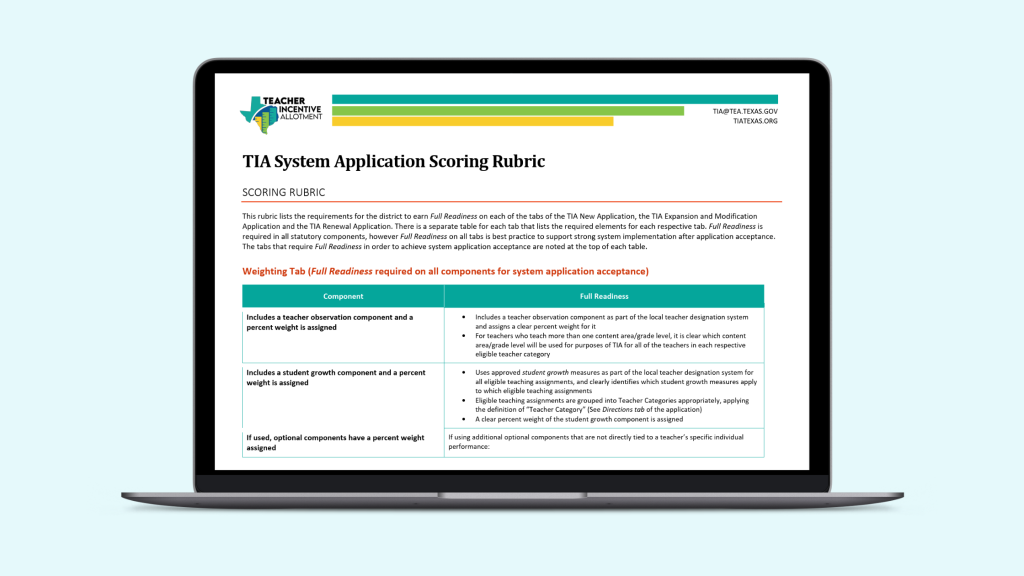
Education Service Center Region 13 partners with districts throughout the entire TIA journey—from early planning through application submission and beyond. Our team supports districts by reviewing applications using the TIA System Scoring Rubric and providing guidance through exemplar responses.
Working with ESC Region 13 can help you:
- Save time
- Reduce stress
- Increase confidence and approval readiness
Districts that collaborate with trusted partners often feel better prepared and more confident in their final submission.
Final Thoughts on TIA Applications
A strong Teacher Incentive Allotment application begins with thoughtful planning, clear communication, and shared understanding. Districts that engage stakeholders, align their systems with requirements, and utilize available supports are better positioned for long-term success.
TIA is not just about funding or designations. It is about strengthening instruction, retaining highly effective educators, and supporting student success. When districts approach TIA with purpose and collaboration, they build systems that are meaningful, equitable, and sustainable.

Camela Guyton is a TIA Assessment Specialist at ESC Region 13.



Add comment