

Many districts across Texas are beginning to explore expansion as their Teacher Incentive Allotment (TIA) systems mature. After launching a local designation system with a smaller group of teachers or campuses, districts often reach a point where they are ready to scale their work and include more educators.
Thoughtful TIA expansion allows districts to extend opportunities for recognition and compensation while maintaining system credibility and sustainability.
Before expanding participation, districts should review their current systems, analyze data, and confirm they have the structures in place to support growth. When done strategically, expanding a TIA system can empower more educators and ultimately benefit more students.
Why Districts Pursue TIA Expansion
Districts often grow their Teacher Incentive Allotment systems for several key reasons.
1. Strengthening Recruitment and Retention
Expanding eligible teaching assignments can strengthen recruitment and retention efforts. By including additional campuses or content areas, districts can offer meaningful incentives in areas where staffing challenges are most common.
2. Creating Equity Across Campuses
Growth within the system can also create more equitable access to teacher incentive designations. When additional assignments become eligible, more teachers have the opportunity to participate and earn recognition based on their impact.
3. Building on a Successful System
Many districts begin with a limited number of campuses or teaching assignments while refining their local designation systems. As processes stabilize and data systems improve, expanding participation becomes a natural next step.
Evaluating TIA Expansion Readiness
Before submitting a TIA Expansion Application, districts should evaluate whether their current systems can support additional participants without compromising quality or credibility.
Key areas to review include observation systems, student growth measures, staffing capacity, and communication processes.
1. Observation System Stability
Maintaining reliable observation scoring becomes increasingly important as more teachers participate.
District leaders should consider the following questions:
- Are appraisers consistently calibrated?
- Is inter-rater reliability documented?
- Can campus leaders manage an increased observation load?
As the number of teachers in the system grows, maintaining scoring integrity becomes more complex. Regular calibration and strong processes help ensure reliable evaluations.
2. Student Growth Measures
Student growth measures play a critical role in the success of a local designation system.
Districts should confirm that their measures:
- Align with state standards and course expectations
- Measure higher-level thinking, not just recall
- Can be implemented consistently across campuses
- Produce stable and reliable results across multiple years
If student growth measures show inconsistencies, districts should address those issues before adding new assignments. A root cause analysis can help identify areas for improvement.
3. Human Capital Capacity
Successful TIA expansion also depends on whether district teams have the capacity to support a larger system.
Districts should review whether:
- Campus leaders clearly understand the designation criteria
- Payroll systems can distribute increased allotment funds
- Teacher eligibility tracking is accurate and easy to maintain
Ensuring these systems are ready helps districts expand confidently.
4. Clear Communication
Communication is essential when adding campuses or assignments to a TIA system.
Districts should ensure messaging remains consistent and transparent so teachers understand:
- Which assignments qualify for designations
- How teachers become eligible
- How the system works across campuses
Clear communication builds trust and helps maintain credibility as participation grows.
Preparing for a TIA Expansion Application
Prior to submitting a TIA Expansion Application, districts should analyze prior-year observation data and student growth results. Reviewing this information helps leaders identify trends, confirm strong student–teacher data connections, and address potential issues early.
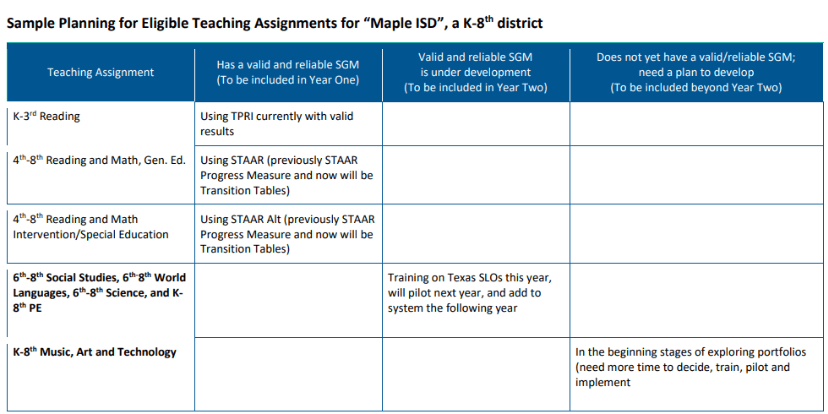
Using a structured planning template can help guide the expansion process. A planning tool allows districts to:
- Make data-informed decisions
- Gather feedback from key stakeholders
- Ensure growth remains sustainable and equitable
With thoughtful planning and strong systems in place, districts can expand their Teacher Incentive Allotment programs while maintaining meaningful outcomes for educators and students.
How ESC Region 13 Supports Your TIA Expansion Process
Whether you’re adding eligible teaching categories, updating your teacher appraisal rubric, incorporating a new student growth measure, or adjusting your spending plan, our team provides hands-on support throughout the process.
We assist with the full development of your district’s expansion or modification application, reviewing drafts and offering detailed feedback before submission. Beyond the application itself, we help ensure that all supporting documentation is complete and compliant. Once approved, our team continues to support you by providing guidance to successfully implement any new components in your system. With ESC Region 13 as your partner, TIA expansion is a structured, manageable, and successful process.

Camela Guyton is a TIA Assessment Specialist at ESC Region 13.



Add comment