

Creating assessments is about more than writing questions. Strong assessments provide accurate, meaningful insight into student learning. When a test is valid and reliable, you can trust the results to see what students know and can do.
This is very important for the Teacher Incentive Allotment (TIA). Here, student growth data helps make important decisions about how effective teachers are. Reliable assessment practices help ensure that growth data accurately reflects student performance and instructional impact.
What Do Validity and Reliability Mean?
A valid assessment measures the skill or standard it is intended to measure. When an assessment aligns closely to a specific learning target, the results more accurately reflect student mastery.
A reliable assessment produces consistent results over time. If a student takes the same assessment under similar conditions, the results should remain relatively stable.
Both validity and reliability matter. An assessment may consistently measure the wrong skill, or it may target the correct skill but produce inconsistent results. In either case, the data becomes difficult to trust. To effectively support instruction and student growth, assessment data must be both valid and reliable.
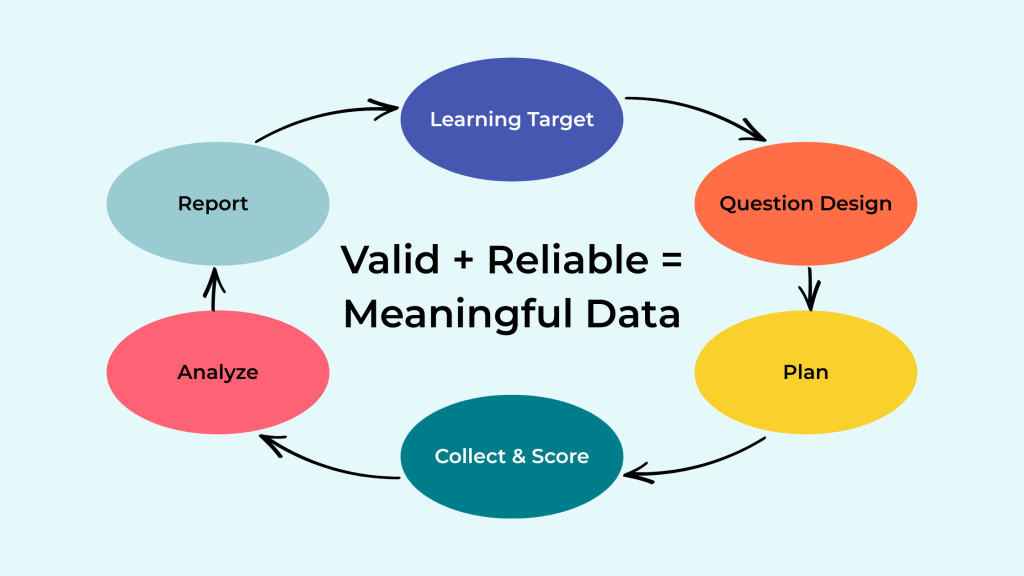
A Process for Creating Valid and Reliable Assessments
Strong assessments are the result of intentional planning and thoughtful design. Each stage of the process contributes to the quality of the data educators collect and use.
Step 1: Start With the Learning
What do students need to know and do?
Effective assessment design begins with a clear understanding of the learning target. Most districts provide a curriculum management system that supports this work through standards, clarification documents, and instructional resources.
These tools help educators identify the specific TEKS or standards being assessed and clarify what mastery looks like at that grade level. Many systems outline the key components of the standard, helping teachers distinguish between supporting skills and the most essential learning that should be prioritized in assessment.
When educators fully use these resources, they can better unpack standards into measurable skills, establish clear success criteria, and determine what evidence demonstrates student understanding.
Step 2: Create the Questions
Design for validity
Once the learning target is clearly defined, educators can begin designing questions that directly measure the intended skill. Each question should align to a specific skill identified within the standard.
Questions that attempt to measure multiple skills at the same time can weaken validity. For example, a mathematics question with overly complex reading demands may measure reading comprehension more than mathematical understanding.
Well-designed questions remove unnecessary barriers while maintaining the rigor of the standard. This approach helps ensure that assessment results accurately reflect student learning.
Learn more about how to create valid and reliable assessments by reaching out to our TIA specialists.
Step 3: Plan the Assessment
How will the assessment be administered?
Consistency in administration supports reliability. Differences in directions, timing, or testing conditions can affect student performance in ways unrelated to content knowledge.
Planning ahead helps educators establish consistent procedures, determine scoring expectations, and create a stable testing environment for all students. These practices become especially important within TIA systems, where inconsistencies in testing conditions may affect student growth data connected to teacher outcomes.
Step 4: Collect and Score
Ensure consistency and fairness
As educators collect student work, consistency in scoring becomes essential. Reliable data depends on shared expectations for proficiency. Without clear scoring criteria, results may vary between educators.
For example, two teachers scoring the same written response may arrive at different conclusions without a shared rubric or calibration process. Establishing clear scoring expectations helps ensure that scores are based on evidence rather than individual interpretation.
Step 5: Analyze the Data
Make meaning of student learning
After scoring is complete, educators can begin analyzing the results to identify patterns in student learning. Looking beyond overall scores can provide more meaningful insights.
Analyzing performance by standard or individual question may reveal strengths, instructional gaps, or potential issues within the assessment itself. For example, if many students miss the same question, educators may need to revisit instruction or revise the assessment item.
This stage also provides an opportunity to reflect on the quality of the assessment. Within TIA systems, data analysis helps confirm that assessment results align with other measures of student growth and teacher effectiveness.
Step 6: Report and Act
Use data to guide instruction and growth
The final step is using assessment data to inform action. Educators may adjust instruction, plan targeted reteach opportunities, or provide enrichment based on student needs.
When assessment data is both valid and reliable, educators can confidently use the results to support student growth and instructional decision-making.
Final Thoughts
Creating valid and reliable assessments is an ongoing process of reflection and refinement. Each step builds on the next to help ensure that assessment data accurately represents student learning.
When educators begin with clear learning goals, design intentional questions, and prioritize consistency throughout the process, assessments become more than checkpoints. They become meaningful tools that support instructional improvement and student success.

Allison Yedinak
Allison is a TIA Assessment Specialist at ESC Region 13.



Add comment