

Strengthening rigor and depth for your classroom doesn’t mean having to change everything you teach. Teachers utilizing the Texas Curriculum Management Program Cooperative (TCMPC) TEKS Resource System (TEKS RS) can effectively employ the Texas Performance Standards Project (TPSP) as a valuable tool for enhancing instruction. In this article we explore strengthening classroom instruction with TPSP and TEKS RS.
What is TPSP?
The Texas Education Agency (TEA) created the Texas Performance Standards Project (TPSP). TPSP uses content standards and allows students and teachers to learn by doing research and making products.
Linking your teaching to important TPSP experiences can help all students think more deeply. It can engage gifted learners who are ready to learn at an accelerated pace and create greater alignment across your instructional plan.
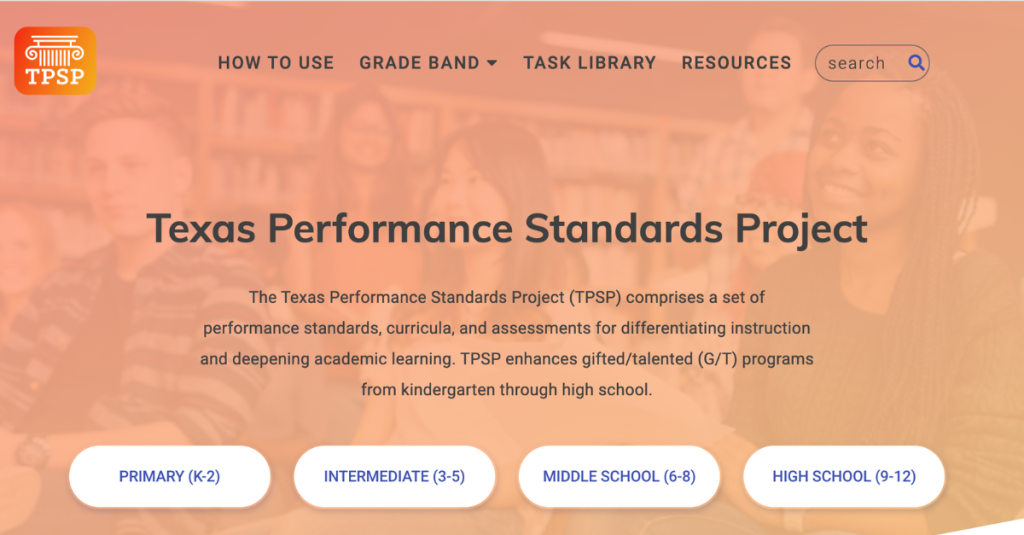
The flexibility to adapt tasks to your classroom context makes this resource a natural complement to TEKS Resource System lessons.
The TEKS Resource System provides the structure for standards-based instruction, while TPSP extends learning through inquiry, research, and authentic application.
Using an Alignment Guide to Connect TPSP to TEKS Resource System
ESC Region 13 created a TEKS Resource System and TPSP K-8 Alignment Guide. This free guide illustrates how TPSP tasks can be integrated within the TEKS Resource System and TExGUIDE.
The guide provides examples of how TPSP and TEKS Resource System can work together. Teachers have the flexibility to decide how best to use each resource to meet the needs of students.
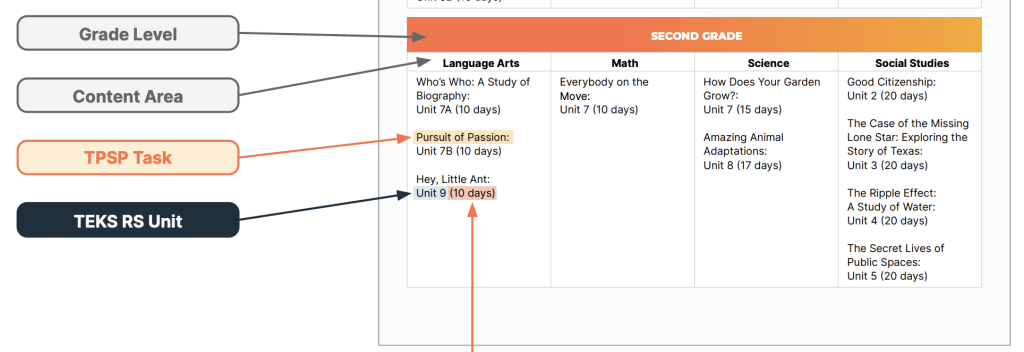
The TEKS Resource System and TPSP K–8 Alignment Guide is organized by grade and subject. It shows how TPSP matches with TEKS Resource System units. This supports thoughtful pacing, integration, and instructional flexibility across K–8 classrooms.
Each grade is divided into four main subjects. It includes the names of TPSP tasks and the matching TEKS Resource System unit numbers, as shown in the example.
Pacing Considerations with TPSP Tasks
Educators may need to adjust pacing within both resources to accommodate a TPSP task. Educators typically implement TPSP and project-based learning tasks over a 10–30 day period. We have included the length of each TEKS Resource System unit next to the unit number to assist with pacing decisions.
Let’s look at two possible integrations and how the timing can change to match the teaching between both resources.
2nd Grade Science: Amazing Animal Adaptations
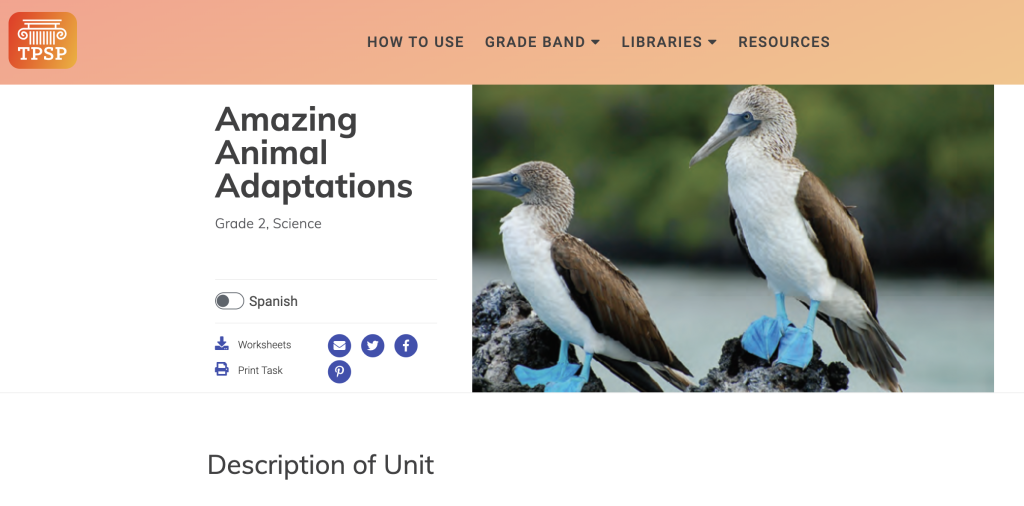
In the alignment guide, Second Grade Science indicates that the task “Amazing Animal Adaptations” can be conducted during TEKS Resource System Science Unit 8, which spans 17 days. During this unit, students explore the physical traits of animals in order to develop an understanding of animal adaptations.
The products developed by students include a drawing of an animal created based on a list of adaptations, along with a biome and animal report that features pictures of animals, their adaptations, and how they live together in the environment.
To make this task fit in 17 days, the teacher may choose to focus on one product that students will create from their research. Teachers can deliver lessons that teach the standard as part of Phase 1 of TPSP and align with TEKS Resource System while integrating research and product development from Phase 2 to deepen and enhance student learning.
5th Grade Math: Designing Spaces
The alignment guide indicates that the task “Designing Spaces” can be incorporated into the TEKS Resource System Math Unit 10, which spans 10 days, according to the Third Grade Math curriculum. This task examines how mathematics applies to architecture and the creation of designed environments.
The product that students develop includes a detailed building proposal with budgets, timelines, and other related considerations.
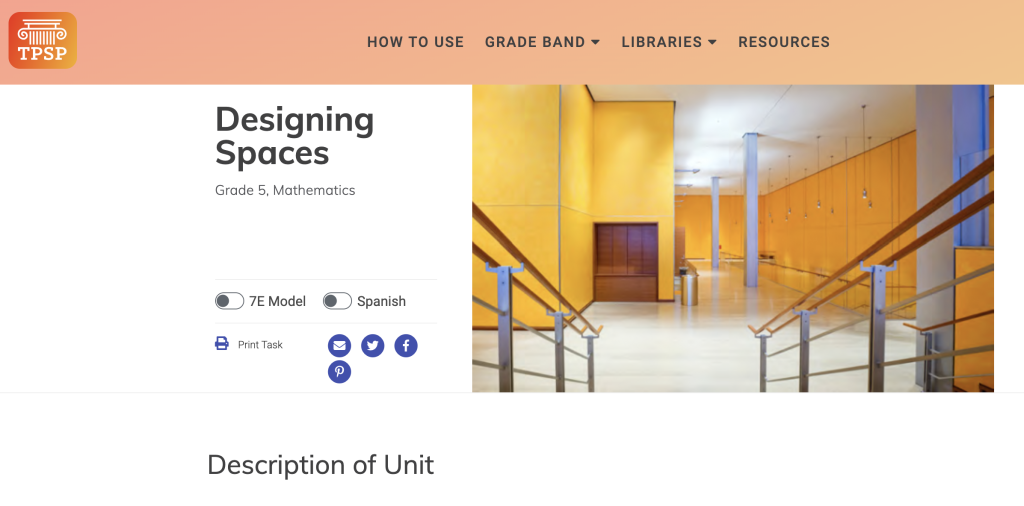
To enhance the integration of this task, you may choose to extend it so that it aligns with additional instructional units within the TEKS Resource System. This would create a new time frame of 15–20 days for task completion.
There is potential to introduce the task towards the end of Unit 9, which focuses on data representations. You can also use the instructional days for the task during Unit 11, which is a review unit centered on decimals.
How to Get and Use the Alignment Guide
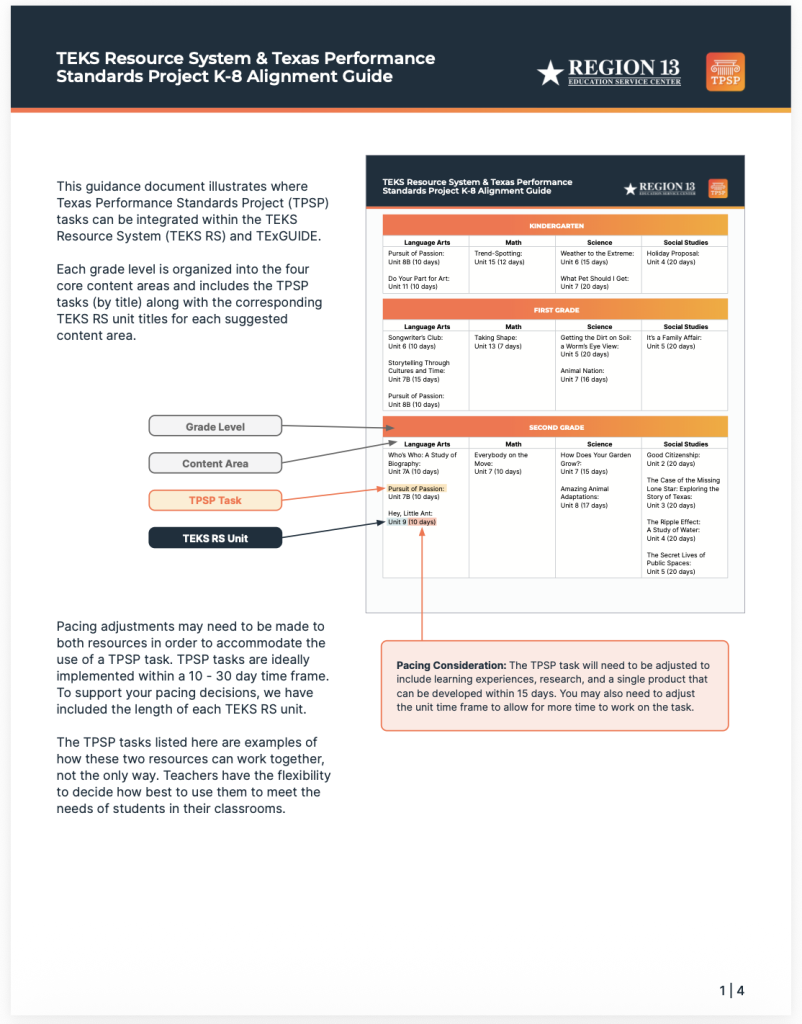
You can find the TEKS Resource System and TPSP K–8 Alignment Guide on the ESC Region 13 Gifted and Talented webpage under the Resource tab. Follow these instructions to get your own copy and start using it now:
- Download the free alignment guide.
- Find your grade level on the alignment guide.
- Look at the suggested task alignment and consider which opportunity works best for your classroom. One task is a great goal for your first year of implementation!
- Consider how to adjust the pacing to best integrate the task.
- You’re now ready to integrate the task into your lesson plans! Remember that the TPSP task is customizable to meet your needs. You can make adjustments to the lessons, products, and research process to make this task work for your students.
Conclusion
By using TPSP and project-based learning together, you can enhance existing instruction. This provides students with opportunities to participate in authentic, rigorous learning experiences. Educators can incorporate TPSP projects into their instructional units to assist students in applying their knowledge meaningfully, developing critical thinking and problem-solving skills, and exploring topics in more depth.
For more help with the alignment guide or continued support with the planning and implementation of a Texas Performance Standards Project task, reach out to the ESC Region 13 Gifted and Talented Specialist. Our website provides more information about the services ESC Region 13 provides to districts, including program evaluation services. Subscribe to our mailing list to stay up-to-date on the latest news and professional development opportunities.
Visit the ESC Region 13 blog for additional gifted and talented related topics.

Amber Reinecke is the Cross-Curricular Systems Program Manager and Gifted and Talented (GT) Specialist at ESC Region 13. She has experience as an elementary classroom GT teacher, as well as six years of experience as a Gifted and Talented Pull-out Teacher and Instructional Coach. She has a passion for working with the gifted community in order to advocate for student needs.



Add comment