

The phrase “STEM education” can mean a lot of different things to different people. If you’re curious about STEM education in Texas, this article addresses seven misconceptions surrounding it and offers a well-researched definition. Let’s dive in!
What is STEM Education in Texas?
The Texas Education Agency (TEA) defines STEM education as a method of hands-on teaching and learning in which students learn to apply academic content by creatively solving real-world problems with innovative design-based thinking to prepare them for future career opportunities.
Why TEA’s STEM Definition is Important
The TEA began developing its approach to STEM education in 2018. The agency started with a listening tour across Texas. They collected feedback from stakeholders, including educators, families, and business and industry leaders. As a result, this definition was built by Texans, specifically for Texas education. The definition is based on STEM education research across the rest of the 50 states and around the world.
Learn More About TEA & STEM
TEA STEM Coordinator Michelle Sedberry discusses the TEA STEM education definition and framework in these short video interview clips.
Click here – Learn more about the framework.
Click here – Explaining the TEA STEM definition.
Are Other Definitions Wrong?
No. STEM education may be defined differently by local education agencies (schools) and organizations who provide STEM-focused programming. However, it is always important to understand what approach a program, practitioner, or entity is taking. Then, you can determine if it meets your needs.
The research conducted by TEA in developing its definition and framework was guided by the needs and goals of Texas communities, education professionals, and the business and industry sectors. Therefore, if a program, practitioner, or other entity uses a different approach to STEM education, consider asking:
“How do you define STEM education? And, how does your approach compare to the Texas Education Agency’s definition of STEM education?”
What Did TEA Learn From Texans on Their Listening Tour?
The TEA heard that STEM education is important to Texans. Moreover, they also heard misconceptions about what STEM education is and why it is important.
Here are the top seven misconceptions about STEM education the TEA heard. And some guidance to help you understand why they are misconceptions.
The Top 7 STEM Education Misconceptions
Misconception 1: STEM is a Course or a Program
STEM is an acronym for Science, Technology, Engineering and Mathematics (STEM). STEM commonly refers to programs, initiatives, and policies related to the technical fields of science. This includes technology, engineering, and mathematics, especially in the context of workforce development and national security policy. (Source: Wikipedia)
However, when refering to “STEM education,” or “integrated STEM education,” we focus on the types of thinking skills students are developing and demonstrating, rather than the specific content they are learning. Middle school science students or elementary students doing math activities are not necessarily engaged in STEM education just because the content is a STEM “field.”
Students learning about geography or nonfiction writing styles can also be engaged in STEM education depending on the instructional method.
Therefore, if you are considering a course, program, or school that identifies itself as “STEM,” be sure to ask:
“What are students learning and how are they learning it?” Or “What thinking skills are students developing?”
Misconception 2: STEM Education is Focused on Preparing Kids for STEM Careers
Without question, there are too many job vacancies in STEM fields. Employers scramble to attract qualified applicants, but too few are present in the job pool. So, is STEM education about preparing students for careers in STEM fields? Yes. But it is also about preparing students for careers in non-STEM fields too.
The goal of STEM education is to encourage students to think like scientists, technologists, engineers, and mathematicians. Even if they choose not to pursue careers in those fields. But why would we want all students to master STEM thinking skills if they’re not going into a STEM field?
Success in STEM fields requires individuals to cultivate a mindset characterized by inquisitiveness, persistence, intellectual risk-taking, and problem-solving. This mindset encourages exploration and discovery to find solutions, a process that involves making mistakes, communicating with others, receiving feedback, and trying again. These are crucial skills for any career pathway or walk of life, in addition to being highly sought-after by employers from all areas of the economy.
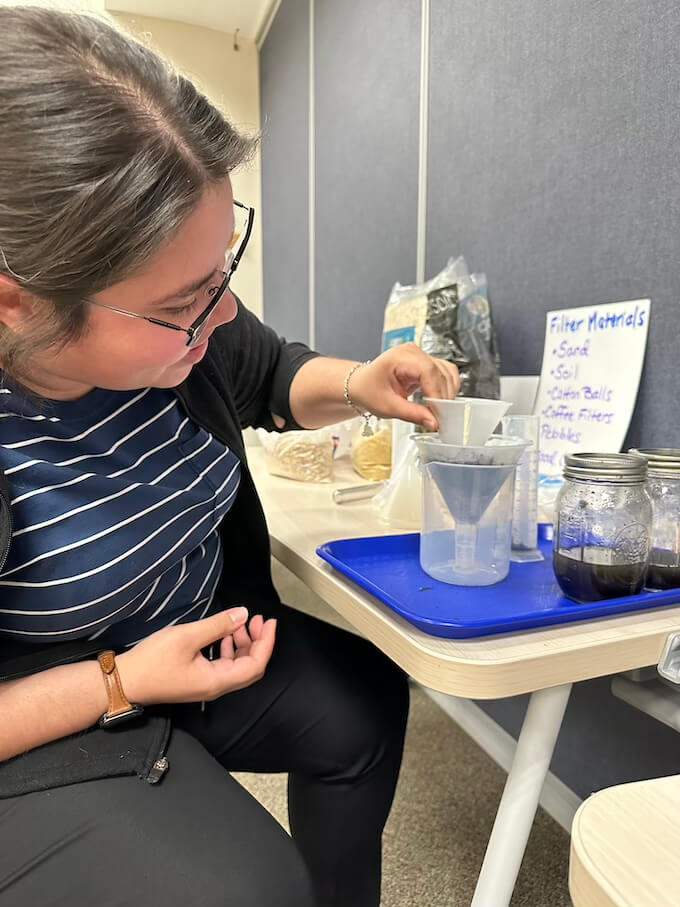
Do your students regularly engage in learning activities that help them develop STEM skills?
One way to incorporate activities is to use TEA’s STEM Fluency Skills Rubric. The TEA developed a core set “STEM Fluency Skills.” Students should be learning and demonstrating these skills throughout their Pre-K through grade 12 education.
The STEM Fluency Skills Rubric is just one of many useful documents from the Texas STEM Education Toolkit. This resource helps guide and refine your teaching practice and guide instructional decisions at the classroom, campus and district levels. TEA-also developed Statewide STEM trainings, available at education service centers across the state. This training helps guide you into a cohesive approach to STEM education informed by your existing programs and initiatives.
Misconception 3: STEM Learning Experiences Need to Equally Represent all STEM Areas
In education, we chunk what students learn into content blocks. For instance, we teach biology, chemistry, algebra, reading and writing. In STEM, science, technology, engineering, and mathematics are not chunks of content. Therefore, they don’t have to be equally distributed in a curriculum or lesson plan.
While the thinking skills used across the STEM fields have common themes, they are not the same. The mindsets that define the fields of science, technology, engineering, and mathematics vary. The problems they seek to address and the solutions they aim to achieve differ. Your instructional approach depends on the types of problems and products you want students to solve or create.
The Texas STEM Education Framework, and its supporting resources, highlight two research-based instructional methods and three well-established STEM problem-solving processes. These aim to assist educators in integrating the thinking skills of STEM fields into their students’ learning experiences.
STEM Instructional Methods
| Project-/Problem-Based Learning (PBL) | Design-Based Challenges |
|---|---|
| Students are engaged in active learning and inquiry through authentic, real-world problems and personally meaningful projects. | Students apply content knowledge to design a product or process that solves a real-world problem, often using a problem-solving approach such as the Engineering Design Process or Design Thinking. |
Problem-Solving Processes/Methods
| Engineering Design Process (EDP) | Computational Thinking (CT) | Design Thinking |
|---|---|---|
| An iterative (repeating) process used to design and test solutions to real-world problems; encourages open-ended problem solving and learning from failure. | A thinking process used to solve problems logically and methodically; promotes a purposedul, describable and replicable method of problem-solving. | A creative and user-centered design methodology combines empathy for the context of the problem, creativity in the generation of insights, and feedback to find a best-fit solution. |
These methods and processes are not new to education. Although educators sometimes use them infrequently or in isolated settings. These methods and processes should overlay the content that students are learning, not replace it.
Eager to learn more? The TEA’s Statewide STEM trainings include hands-on experiences with PBL and Design-Based Challenges, as well as opportunities to use and apply the EDP and CT processes. You can find supporting documents in the Engagement Tools section of the Texas STEM Education Toolkit.
Misconception 4: STEM Instructional Experiences Must Use PBL or Engineering Design Approach
In particular, full-on Project- or Problem-Based Learning (PBL) generally involves sustained or ongoing inquiry into challenging questions or problems, reflection, and improvement based on feedback. Students present their products and solutions to authentic audiences. It is generally not a single-day affair. A complete engineering design process cycle, which relies on iterative (repeated) phases of planning, building, testing, and improving, requires significant time, particularly when the objective is to achieve a real-world solution. What’s more, many educators have never experienced a full PBL or design process themselves, so the thought of leading students through them can sometimes feel intimidating.
Doing STEM does not mean you must implement a full-blown PBL or design process for every lesson. Getting there is a great goal, but the most important thing is to start somewhere (anywhere!) and grow.
The rubrics and guides in the Texas STEM Education Toolkit help map your current practices to STEM education goals. You can then use them to envision what to try next to help build your STEM education abilities. For instance, the High-Quality STEM Model Identification Guide outlines four levels of implementation. It covers 22 different STEM education goals, which include goals related to project-based learning (PBL) and engineering design. Additionally, the PBL STEM Connections brief illustrates how the complexity of PBL experiences develops progressively throughout a student’s PK-12 journey.
Don’t let concerns about the quality of your implementation stand in the way of getting started. Finding and creating the STEM education approaches that work for you and your students is an iterative (repeating, improving) process! But, if you’ve looked at the resources and still have questions, contact your education service center STEM Lead for guidance.
Misconception 5: STEM is Best-suited for Upper Elementary and Above
It is understandable why people might feel this way. The STEM fields involve technical aspects: research, calculations, prototyping, coding, etc. Design challenges often involve materials that need careful management. And developing design solutions may require fine motor skills that can frustrate our youngest learners. However, after asking early childhood teachers, most always say, “My kids could absolutely do this!” once they’ve experienced a design-based challenge or PBL activity.
Our youngest learners may be even more open to STEM learning experiences because they have not yet learned to fear failure. A mindset of exploration and discovery comes more naturally to a young child than an older child whom others have taught to seek correct answers. STEM experiences can help learners of all ages practice and maintain their inquiry skills and aptitude for innovation.
Misconception 6: STEM Education Requires Costly Material and Dedicated Learning Spaces
Fancy equipment and beautiful, well-appointed spaces are nice, just not required. Schools can meet all of the indicators of high-quality STEM education on the Texas STEM Education Framework without costly equipment or dedicated learning spaces, with the possible exeption of middle school and high school CTE and advanced-level STEM pathways. The point here is not to let funding stand in the way of working towards an instructional paradigm that will help build brighter futures for your students.
Meeting all the indicators does take some funding and plenty of time and effort, but a good portion of the work can be wrapped in with other district / campus initiatives. And, some of the goals involve finding external stakeholders to help support your STEM work.
Learn More About TEA & STEM
Want to learn more about misconceptions around STEM education? Then, watch another interview clip from our conversation with TEA STEM Coordinator Michelle Sedberry!
Click for – What is a barrier to starting STEM Education?
Misconception 7: STEM is Just Another Box to Check
Time and energy are limited resources, and educators frequently have many more demands than they can manage. After all, taking a different approach to teaching the same content is still doing something different, which takes time and energy.
The Texas STEM Education Framework seeks to shift the way we approach the education of our students from the time they enter our care to the time they leave it. Making STEM education a check box dooms it to mediocrity.
If you are a leader who wants to provide your students with high-quality STEM education, put the resources of time, training, and guidance into it. This doesn’t mean you have to overhaul the whole system. Start small, but with intention. Give people the space to learn and grow within the work. This work is important. And fun! STEM teaching and learning is highly engaging for both teachers and their students. Give it a try and see for yourself!
Conclusion
The phrase “STEM” education can mean a lot of different things to different people. It’s important to clarify what they think it means during conversation. TEA has defined STEM education in Texas based on listening to educators, parents, and community members. We’ve discussed common misconceptions that surround STEM in this article.
If you have additional questions or need help developing the STEM program on your campus, reach out to our ESC Region 13 STEM Specialist. Visit the ESC Region 13 STEM website for details on current professional development opportunities, resources, and related articles. Subscribe to our newsletter for the most current information in the area of STEM and Cross-Curricular Systems.

Adrienne Arroyo
Adrienne Arroyo is the Education Service Center Region 13 STEM Specialist.



Add comment