

The principal and assistant principal relationship carries a campus, yet it rarely gets the same deliberate attention as the rest of the staff. Once the daily rhythm sets in, it’s easy to let the relationship run on autopilot.
But the strength of your leadership team shows up in everything downstream. That makes this relationship worth the same kind of honest, ongoing reflection you bring to every other role on campus.
This time of year, you can hear the excitement in the halls. You’re preparing for open houses and other fun events, but it’s also important to make time for the relationship with your assistant principal. Nurturing that relationship should be a priority as you begin the semester.
Collaboration Isn’t Optional
It’s easy to think of the principal and assistant principal relationship as a matter of dividing tasks efficiently. As long as the work gets done, it can seem like the relationship is working.
But a purely transactional dynamic can fall apart when a campus needs its leadership team the most: during a crisis, a difficult personnel decision, or anything else that requires a quick response.
A truly collaborative relationship changes the picture.
An assistant principal who is in classrooms every day sees instructional patterns a principal focused on operations might miss. A principal fielding calls from the district office has context an assistant principal may not. When you bring those two perspectives together, you get a fuller picture of what’s happening on campus.
Collaboration also builds trust with staff. Teachers pick up on leadership dynamics quickly. When a principal and assistant principal clearly trust each other, staff feel more comfortable bringing difficult problems forward. When the two leaders seem disconnected, staff may learn to work around them instead of through them.
Hard decisions also land better when they come from a united front. Discipline decisions, staffing changes, and difficult parent conversations go more smoothly when they reflect a team that worked through disagreements privately before moving forward.
Principals who try to carry every decision themselves can burn out. Assistant principals who aren’t included in meaningful decision-making may disengage or look for a role where they’re trusted with more responsibility.
Sharing the weight of leadership helps you support your team and keep good people around. None of this happens automatically. It takes the same deliberate effort you bring to other relationships on campus.
Ask the Same Questions You’d Ask About Any Staff Member
Principals often reflect on whether teachers are in the right roles. It’s worth turning that same lens toward your leadership team.
Ask yourself:
- What do I actually know about how my assistant principal thinks and works beyond what surfaces in a weekly check-in?
- Where does our division of responsibility overlap or leave gaps?
- What would real support for my assistant principal look like, beyond handing off more tasks?
Many principal and assistant principal relationships settle into whatever division of labor emerged during the first year and never get revisited, even as the campus’s needs change.
Name Your Values Before Dividing the Work
Before you divide responsibilities, take time to understand what each of you stands for as a leader.
Start by downloading the Leadership Values Reflection, and use it to identify your individual leadership values before working through the questions below.
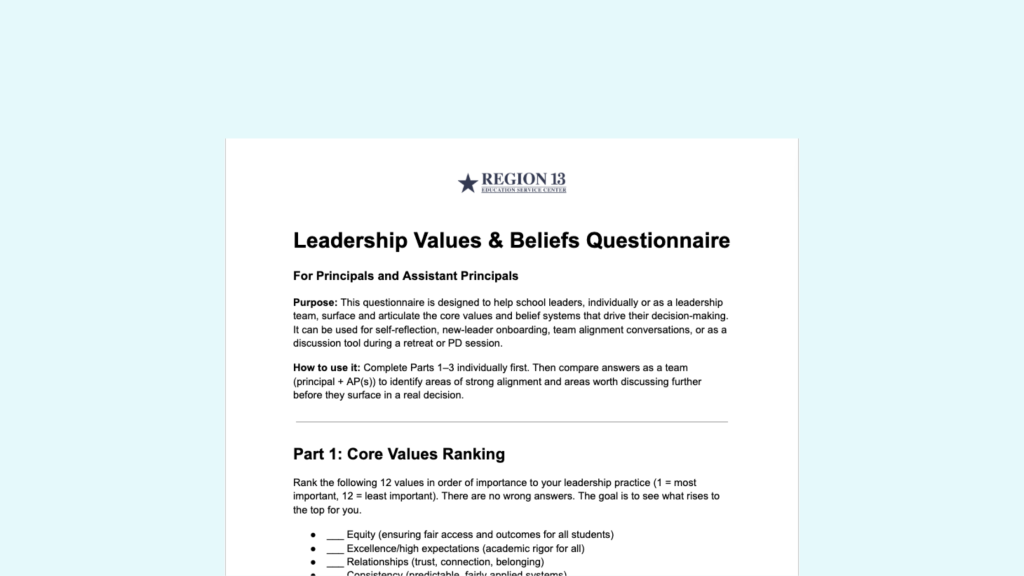
Once you’ve reflected individually, consider these questions together:
- Where do your two values overlap, and where do they diverge?
- How might those differences show up in how each of you handles a difficult conversation, a disciplinary decision, or a staffing decision?
- Do your individual values show up in how the campus operates day to day?
For example, if your assistant principal names integrity as a core value and you name efficiency, those values aren’t necessarily in conflict. But you may need to talk openly about what happens when a quick decision and a fully transparent decision pull you in different directions.
Naming those values ahead of time makes that tension something you can work through rather than something that quietly wears on the relationship.
Have the Conversation Out Loud
The most common challenge isn’t a bad assistant principal or an unreasonable principal. It’s a relationship where the division of labor was never actually discussed.
Roles often get inherited from whoever held the job before rather than designed intentionally for the needs of the current campus.
A worthwhile conversation between a principal and assistant principal might include questions such as:
- Where do our strengths overlap, and where are the gaps?
- Has our current division of responsibilities confused staff at any point?
- What decisions should the assistant principal be trusted to make independently this year?
- What does the assistant principal need from the principal to grow? Could that include visibility with the board, ownership of a new project, or honest feedback on their leadership?
- Are we preparing this person for their next role, or treating the position as fixed?
These conversations create clarity before challenges arise. They also give both leaders an opportunity to shape the relationship rather than simply react to what the campus requires.
The Tone Gets Set at the Top
Leadership culture on a campus starts with the principal and assistant principal.
If the two of you operate with unclear roles or an unspoken, top-down dynamic, that pattern can show up everywhere else in the building. Teachers notice how leadership communicates, collaborates, and handles disagreement.
When you model clear roles and genuine trust, staff notice that, too. It can change how supported they feel and how comfortable they are bringing challenges to the leadership team.
This isn’t a soft add-on to the real work of running a campus. It is the real work.
Time spent clarifying roles, being honest about your values, and investing in your assistant principal’s growth can contribute to a calmer, steadier year for everyone on staff.
As you plan for your staff this year, don’t overlook the person in the seat right next to you. Your assistant principal can be one of your greatest champions.

Lizeth Thompson
Lizeth is an Educator and Evaluation Leadership Administrative Specialist at ESC Region 13.



Add comment