
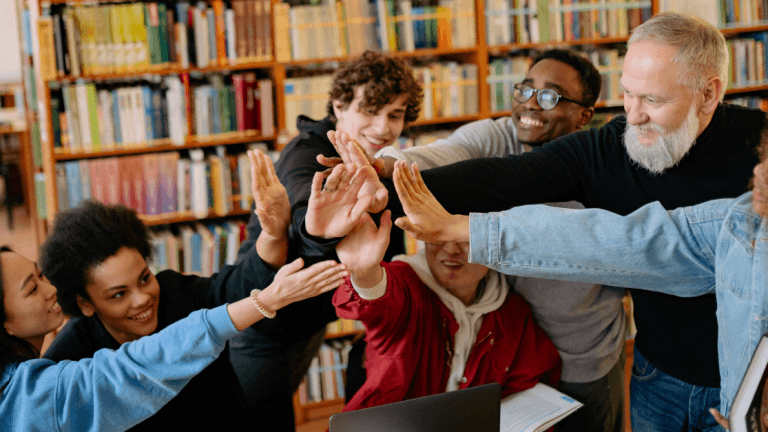
Relationships Before Rigor
There is always a lot to do at the beginning of a school year. We learn names, teach rules, establish routines, learn the schedule, set expectations, dive into the curriculum, figure out the technology, and answer approximately 4,000 questions. Somewhere in the middle of all of that, there is one thing we cannot afford to overlook: connection.
Before students are ready to take academic risks, accept corrections, persevere through frustration, or fully engage in learning, they need to know something fundamental: “I am safe here. I am valued here. I belong here.”
When the school year begins, it’s worth remembering:
- Relationships are not the thing we do after we finish the “real” work.
- Relationships are what make the real work possible.
The Foundation Comes Before the Learning
We often talk about academic rigor, and we should. We want students thinking critically, solving complex problems, asking questions, defending their ideas, making connections, and stretching beyond what they already know. But rigor requires risk. Students have to be willing to say, “I don’t know,” answer incorrectly, try something difficult and possibly fail, and accept feedback without interpreting correction as rejection. That becomes much easier when students trust the adult in the room.
The Center for Whole-Child Education at Arizona State University identifies 16 Building Blocks for Learning on developmental skills and mindsets that support students’ ability to learn and thrive. Among those foundational building blocks are attachment and social awareness/relationship skills. This research highlights how positive relationships, consistent adult support, and supportive classroom environments contribute to students’ readiness to learn and develop important academic and behavioral skills.
In other words, the relationship between an adult and a student isn’t separate from learning.
It is part of the learning environment.
Accountability and connection can and should exist together.
A Safe and Secure Relationship Changes the Classroom
The Center for Whole-Child Education places attachment among its Building Blocks for Learning. Attachment refers to the deep, enduring emotional bonds that connect people over time. In schools, this reminds us of something remarkably simple: Students need adults they can count on.
They need adults who are predictable, who listen, who notice, and who don’t embarrass them when they make a mistake. They need adults who can correct behavior without communicating, “You are a bad kid,” and who keep believing in them—even on the days when believing in them feels difficult.
A safe and secure relationship doesn’t mean a student will never misbehave. It means that when behavior goes wrong, the relationship doesn’t have to go with it. That matters because students who know, “My teacher isn’t giving up on me,” are often much more willing to get back up after they fall.
The Small Things Are the Big Things
The best relationship-building strategies are often incredibly simple. They don’t require a new initiative, a new curriculum, or another item on your already-too-long to-do list. More often, relationships are built through the small moments that happen every day.
Try This Strategy:
2×10 Relationship Building: How to Do It (and Why It Works!)
Choose one student you haven’t naturally connected with. Maybe it’s the student who rarely speaks, the student who challenges every direction, the student you find yourself correcting over and over, or—if you’re being honest—the student you are already a little frustrated with.
Spend about two minutes a day for 10 consecutive days talking with that student. This isn’t the time for a behavior lecture or a missing-assignment conversation, and there shouldn’t be a hidden agenda. Just talk. Ask about their interests, listen to what they have to say, and remember what they tell you.
Twenty minutes can be a surprisingly powerful investment in a relationship.
Greet Students at the Door
A greeting takes seconds. A student’s name takes seconds. A smile takes seconds. But those seconds can communicate something much bigger: “I see you. I’m glad you’re here. You belong in this classroom.”
Don’t underestimate the power of being intentionally welcomed.
Notice More Than Behavior
Sometimes our relationships with students become almost entirely behavior-based. “Sit down.” “Stop talking.” “Where’s your assignment?” “That’s not appropriate.” “You need to make a better choice.” Of course, students need correction, but if most of our interactions with a student happen because something has gone wrong, that student can begin to associate us with correction.
Look for opportunities to notice students being interesting, not just being “good.” Tell a student their drawing is great. Ask how their game went. Let a student know you noticed that they helped someone without being asked. Tell them they have an interesting perspective and ask them to tell you more.
Connection grows when students realize:
“My teacher is interested in me as a person, not just in managing me as a student.”
Rita Pierson Got It Right
Educator Rita Pierson famously said, “Kids don’t learn from people they don’t like.” Her TED Talk, Every Kid Needs a Champion, continues to emphasize the power of human connection and the importance of adults believing in their students.
The quote is often repeated, but perhaps the bigger message is worth remembering:
Every student deserves a champion.
Rita Pierson
Not necessarily someone who makes excuses for them, lets them avoid hard things, or never corrects them. A champion is someone who refuses to define a student by their worst day. A champion sees possibility when the student may not see it yet and is willing to say, “I know you’re capable of more,” “We’re going to figure this out,” and “I’m not giving up on you.”
That kind of relationship can change the trajectory of a student’s experience at school.
Connection Doesn’t Happen All at Once
Here’s the part we sometimes forget: not every student is going to connect with us immediately.
Some students will walk into your classroom ready to engage, while others may have every reason to be guarded. Some have learned that adults don’t always stay. Some have experienced correction without connection, while others have heard more negative things about themselves than positive things. Some students may even test the relationship before they trust it.
Don’t take that personally, and don’t give up.
Relationships are built through consistency over time. Keep greeting them, listening, noticing, and showing up. Keep holding high expectations while communicating that their behavior may need to change, but their worth never does.
One great conversation may not change a relationship.
But hundreds of small moments can.
Try This Tomorrow
You don’t have to completely redesign your classroom to strengthen relationships. Start small and choose one thing you can intentionally put into practice.
Greet every student by name. Stand at the door, make eye contact, and say hello.
Find one student to know better. Use the 2×10 approach and simply spend a few minutes getting to know them.
Ask a genuine question. Instead of “Did you do your homework?” try asking, “What are you looking forward to this week?”
Notice something beyond behavior. Pay attention to a skill, an interest, an idea, or a personality trait.
Remember something. Bring up something a student told you earlier and show them that you were listening.
Let students see the real you. Share something appropriate that helps them know the person behind the teacher. Authenticity matters, and students can tell when we are genuinely interested in knowing them.
Repair instead of simply reset. If you had a difficult interaction with a student, don’t let the next day begin with the assumption that the relationship is broken. Start again.
A Quick Reflection for Educators
Before you leave school this week, take a few minutes to reflect on the relationships in your classroom.
Who in my classroom knows without a doubt that I believe in them?
Who might not know that yet?
Which student do I naturally connect with, and which student requires me to be more intentional?
Consider whether your students experience you as authentic and whether, when you correct behavior, they know that you still value them. And perhaps ask yourself the question that gets to the heart of it all:
If my students described my classroom in one sentence, would they say, “I feel like I belong there?”
The Real Curriculum
There will always be another lesson to plan, another standard to teach, another behavior to address, another email to answer, and another deadline to meet. But in the middle of all of it, remember the student sitting in front of you.
Before rigor, there is relationship. Before correction, there is connection. Before we ask students to take risks, we need to create a place where it feels safe to do so. Before students can believe in themselves, sometimes they need an adult who believes in them first.
So teach the content. Teach the procedures. Teach the expectations. Hold students accountable. Push them toward excellence. But don’t forget to know them.
Because relationships aren’t something we do instead of teaching.
Relationships are how we teach. “Be a Mr. Jenson!“
And sometimes the most important thing a student learns in our classroom isn’t on the lesson plan at all. It is:
“I matter.”
“I belong.”
“My teacher sees me.”
“Someone believes in me.”
Here’s to strong classrooms, high expectations, and real connections.
Relationships before rigor.
Keep the Conversation Going
At ESC Region 13, we believe supporting student behavior begins with understanding the people behind the behavior. Whether you’re strengthening classroom relationships, building positive behavior supports, coaching teachers, or developing campus-wide practices, our Behavior team is here to partner with you.
Looking for practical strategies to strengthen relationships, classroom management, and student behavior? Explore ESC Region 13 professional learning and connect with our team.
Your next step: Choose one relationship-building strategy from this article and try it tomorrow. Then ask yourself, “What difference did it make?”
Small moments create strong relationships, and strong relationships create classrooms where students are ready to learn.

Angela has 24 years of experience in education. She has been in her current position for 12 years. Angela has trained and provided coaching support to over 200 campuses for PBIS. She is also a certified Restorative Practices coordinator. She is a trainer for Interventions, Coaching Classroom Management, CHAMPS, and Why Try.


Add comment