
Many teachers across the country say that today’s students appear to be more challenging to teach than ever before. Their attention spans are fractured, their classroom engagement is low, and mental health issues are at an all-time high. But something called the science of learning offers a solution. And because of that, despite the very real challenges today’s teachers face, there’s neveer been a better time to be an educator than now.
Let’s examine that statement and see how you can use the science of learning to make learning more engaging and memorable for your students.
The Science of Learning
So why is it still a great time to be a teacher?
- From the field of cognitive science, we now know more than ever about how our brains process new information and create lasting memories and knowledge. This is the science of learning.
- From education research studies conducted in real classrooms, we now have better information than ever about which teaching strategies have proven positive effects on student learning. This is the science of teaching.
That’s incredibly exciting. It inspires hope that better, more joyful, and more engaging teaching and learning can be achieved when educators possess the knowledge and support to incorporate cognitive science and research-based strategies into their lesson planning and delivery.
The Impact on Student Learning Experiences
We’re not alone in our optimism. A recent article in The 74, “What Happens When a 48K-Student District Commits to the ‘Science of Learning’,” illustrates the power of designing and delivering student learning experiences that better reflect how our students’ brains work.
For years, Frederick County Public Schools, a diverse district 50 miles west of Baltimore, had struggled to close achievement gaps until it made focusing on the science of learning a centerpiece of its systemwide improvement efforts. It is now seeing significant and sustained improvements for students in disadvantaged groups in both math and reading.
We’ve seen similar improvements in student learning with the schools and districts we’ve partnered with to embed the science of learning and teaching into all classrooms.
Focus on High-Quality Tier 1 Instruction Leads to Student Gains
For several years, Wilson County Schools in Tennessee has partnered with McREL to strengthen principals’ instructional leadership and teachers’ effective delivery of Tier 1 best first instruction, known in the district as powerful core instruction. As a result, student achievement has increased.
“This past year we reached record-setting levels in both achievement and growth,” said Dr. Jennifer Cothron, Deputy Director of Academics. “McREL’s guidance helped us stay focused, be intentional with our supports, and make the necessary adjustments that positioned our schools for success.”
Read more about Wilson County Schools’ focus on the Science of Learning and teaching on the McREL blog.
Applying Cognitive Science
Cognitive science (the science of learning) has been around for decades. Its application can have powerful effects on student learning; however, it’s rarely taught in teacher education programs. As a result, many teachers don’t understand how to guide the process of learning. Thus, they are unable to make adjustments when students struggle to learn.
The great thing about the science of learning is that its principles are simple and intuitive for teachers.
For example, The 74 article also features a collaboration between a small rural district in southwestern Colorado and Deans for Impact to use high-level questions that reflect the science of learning principal of “effortful thinking.”
Teachers have long asked questions in the classroom, of course. The key is asking the right kinds of questions. Jim Heat from Deans for Impact and Bryan Goodwin from The McREL Institute discussed how to use questions and other strategies to promote deeper thinking among students in a recent Educational Leadership article titled, “Moving from Engagement to Deeper Thinking.”
Intentional Teaching Leads to More Joyful Learning
We’ve noticed two things happen when school and districts focus on the science of learning and teaching.
First, as teachers better understand how learning works, they often experience a breakthrough moment in their careers. When they approach their practice with intention, they gain an understanding of not only what to do, but also when and why to do it.
Second, as teachers begin to design and deliver units of study, lessons, and classroom activities that better reflect how their students’ brains work, learning becomes easier and more joyful—for students and teachers.
Science of Learning and Teaching Resources
The McREL Institute has resources to help you harness the power of the science of learning and teaching in your classroom.
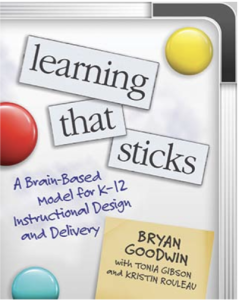
Learning That Sticks
Learning That Sticks describes a model for planning and delivering instruction that’s based on cognitive science. The six-phase model for student learning shows teachers how to capture students’ interest in learning, sustain their motivation and commitment to learning, and create deep, long-lasting knowledge.
- Learn more about the book.
- Learn more about the online course.
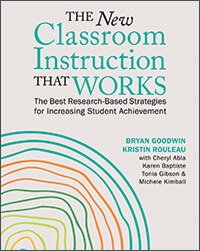
The New Classroom Instruction That Works
The New Classroom Instruction That Works is a collection of 14 foundational, universal teaching strategies that research shows have significant positive effects on student learning. When thoughtfully and skillfully used by teachers, these CITW strategies support highly effective Tier 1 instruction for all students.
- Learn more about the book.
- Get the free Reader’s Companion Guide.
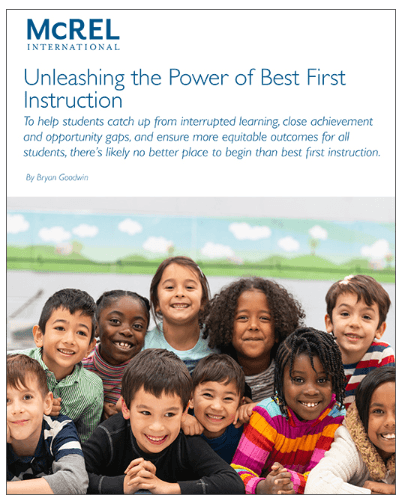
Unleasing the Power of Best First Instruction
Unleashing the Power of Best First Instruction is a white paper explaining the power of best first instruction and describes each of the 14 strategies in The New Classroom Instruction That Works.
- Get your copy of the paper.
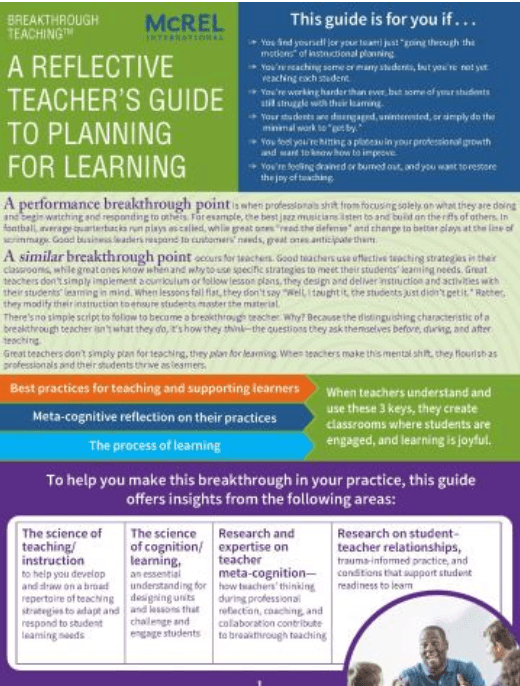
Breakthrough Teaching: Planning for Learning
Our quick reference guide, Breakthrough Teaching: Planning for Learning, offers teachers quick, practical tips and insights drawn from the following areas:
- The science of teaching/instruction
- The science of cognition/learning
- Research and expertise on teacher meta-cognition
- Research on student-teacher relationships
Learn more about the guide.
Additional Resources
Find out more about the McREL Institute at ESC Region 13 by visiting our website. Here you can learn about upcoming professional development opportunities and resources. Visit the ESC Region 13 blog for additional articles on Strategic Instruction.
Note: This article was originally published on the McREL Institute blog on November 25, 2024. It was revised for the ESC Region 13 blog in June 2026.

Bryan Goodwin is the Deputy Executive Director for the McREL Institute at ESC Region 13.



Add comment