
The school year is winding down, and like many principals, you are already thinking about summer, staffing, and the many tasks that come with an end-of-year closeout. One area that often gets overlooked is how we close out our systems and processes.
The end of the year is one of the best times to reflect, refine, and protect the work you and your team have built. As school and district leaders, you help build systems that support ongoing progress and development for both students and your organization. Strong systems help your campus improve year after year.
End-of-year closeout is not just about wrapping things up. It is about making sure that the good systems, routines, and processes your campus has created stay in place over the summer. This work helps you and your team start strong next year, rather than rebuilding from scratch. In doing so, you preserve momentum, reduce stress, and better support students and staff.
Why Prioritize End-of-Year Closeout Work?
It is easy to feel like you already have too much on your to-do list. However, when a school year ends, a lot can shift quickly. Staff may change, documents can get lost, data might disappear as systems update, and good processes may be overlooked if they are not noted down.
Without a clear closeout process, the next school year often begins with unnecessary frustration, lost time, and avoidable confusion. In some cases, student documentation starts over, creating challenges for students, teachers, and families. In others, key staff members leave, taking critical institutional knowledge with them.
These disruptions can affect staff morale, reduce efficiency, and make it harder to provide consistent support for students. By intentionally capturing and organizing your systems, you help ensure that the work continues beyond one person, one year, or one role.
What Gets in the Way?
Even when you know this work matters, several common barriers can prevent it from happening.
End-of-year closeout occurs during one of the busiest times of the year. You are managing staffing, scheduling, final data checks, summative evaluations, and summer planning. Many leaders and teachers are also preparing for or working in summer roles.
Additionally, it can feel easier to keep moving forward than to pause and reflect. Staff turnover adds another layer of complexity, making it difficult to sustain systems without clear documentation. Sometimes, systems are “working well enough,” so they continue without being refined, documented, or shared.
How to Overcome End-of-Year Closeout Barriers
The most effective way to overcome these challenges is to be intentional and proactive.
Start by scheduling time to reflect.
If you do not prioritize this time, it will not happen.
Next, identify one system that is working well. While it may be tempting to focus on several areas, narrowing your focus ensures meaningful progress. Choose a system that has a strong impact on students and staff.
Check out our Systems to Get Out of Your Office and Into the Classroom workshop to explore three systems that allow for efficient processes.
Use evidence, not just perception, to evaluate effectiveness. Look at meaningful, student-centered data to determine how well the system is working. Strong systems should be reflected in outcomes, staff experience, and student support.
Once you have identified the system and understand why it matters, clarify:
- Who is involved
- What each person is responsible for
- When key actions take place
- How the system operates
This clarity supports smoother transitions, especially when roles change.
Then, make the process visible and accessible. Consider practical strategies such as:
- Clearly labeling documents
- Storing information in a shared location
- Outlining each stage of the process
- Ensuring multiple stakeholders understand the system
Tools like one-pagers, spreadsheets, flowcharts, or transition meetings can make systems easier to transfer and sustain.
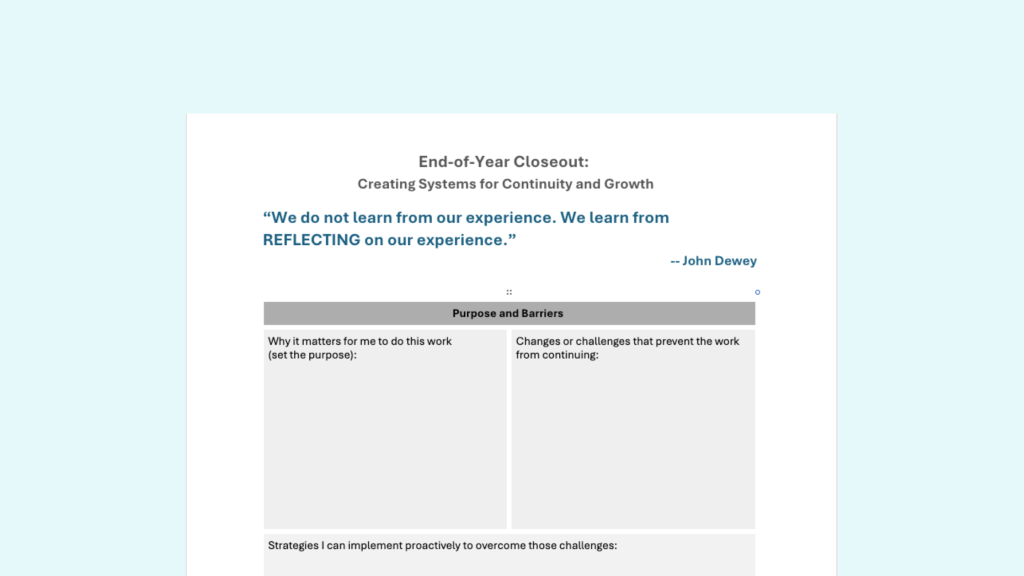
Use this End-of-Year Systems Closeout Planning Sheet to guide your reflection.
Planning for Growth and Continuity
After documenting your system, consider how it can improve.
The goal is not to overhaul everything. Instead, identify one or two refinements within your control that would make the system more effective. This might include:
- Clarifying a step
- Improving communication
- Streamlining documentation
- Making the restart process smoother for August
Finally, plan for reintroducing the system next year. Consider:
- When will new staff learn the system?
- What do they need to know immediately?
- What tasks should happen now versus at the start of next year?
These decisions turn reflection into action.
Closing Thoughts
End-of-year closeout is ultimately about stewardship. It is about appreciating the work enough to keep what works well, change what needs fixing, and make it easier for those who come after.
When you build systems for lasting success, you’re not just ending the year well; you’re preparing your campus for a better start and a stronger future.
As you begin this process, use the End-of-Year Systems Closeout Planning Sheet to guide your reflection. Focus on one system, document what is working, identify key contributors, and determine one or two meaningful improvements.
Small, intentional steps now can save time, reduce stress, and protect the progress your campus has already made, ensuring a smoother start next year.

Natalie was an Educator Evaluation and Leadership Administrative Specialist at ESC Region 13.



Add comment