

The Texas Education Agency (TEA) released preliminary 2026 A–F Accountability ratings to school systems through the TEA Login (TEAL) Accountability application on August 12, 2026. These ratings, including distinction designations, are preliminary and may change through the accountability appeals process before TEA issues final ratings. This article investigates moving from 2026 accountability ratings to 2027 planning and what districts need to know about the process.
Preliminary Ratings Are Not Final
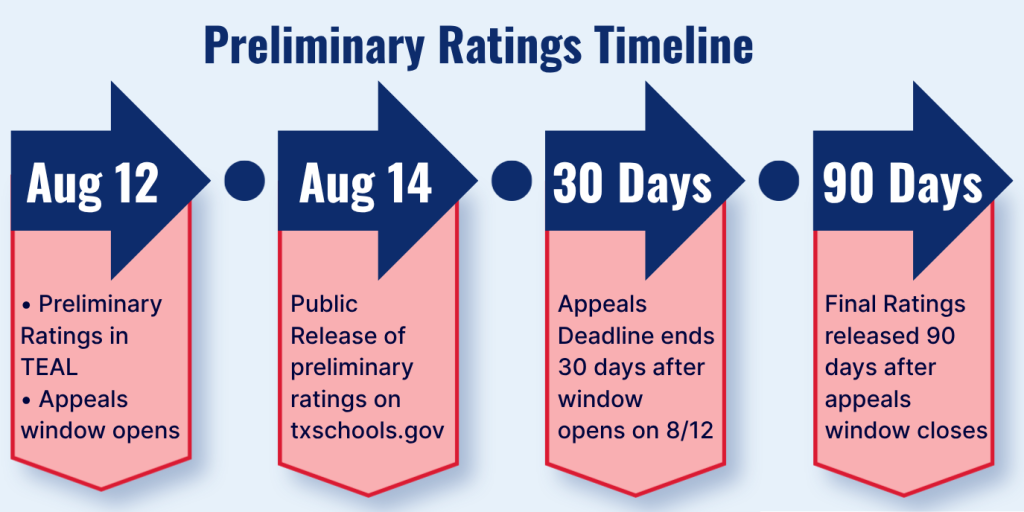
Preliminary ratings, data tables, federal school improvement identifications, distinction designations, and other accountability reports became publicly available on August 14, 2026, on txschools.gov and the TEA Performance Reporting website.
For district and campus leaders, the ratings release is more than a letter grade. The reports provide information that helps schools see what caused each rating, identify strong points, determine where they need support, and begin planning for the next year.
With the final 2027 Accountability Manual already available, school systems can move directly from reviewing their 2026 results to planning under the rules for the 2027 accountability system.
Start With the Overall Picture
Begin by reviewing the overall rating and the three domain scores:
The overall rating provides a summary of performance, but it does not explain what drove the result. Reviewing each domain allows leaders to assess if the rating was affected by current student performance, academic growth, relative performance, student group outcomes, or a combination of these factors.
Leaders should also compare preliminary results with internal accountability calculations completed before the release. If the results differ, the supporting data tables can help identify where those differences occurred.
Look Beyond the Letter Grade
After reviewing the overall and domain ratings, examine the individual indicators within each domain.
Depending on the school type, this review may include:
- STAAR performance at Approaches Grade Level or above, Meets Grade Level or above, and Masters Grade Level
- College, Career, and Military Readiness (CCMR) outcomes
- Graduation rates
- School Progress Part A: Academic Growth
- School Progress Part B: Relative Performance
- Closing the Gaps components and student groups
- School Improvement Identification Targeted Support information
A district or campus may have maintained the same overall rating while changes within individual domains or student groups occurred. Similarly, an improved outcome in one area may be offset by a decline in another. Reviewing the detailed results provides a more complete picture than the overall rating alone.
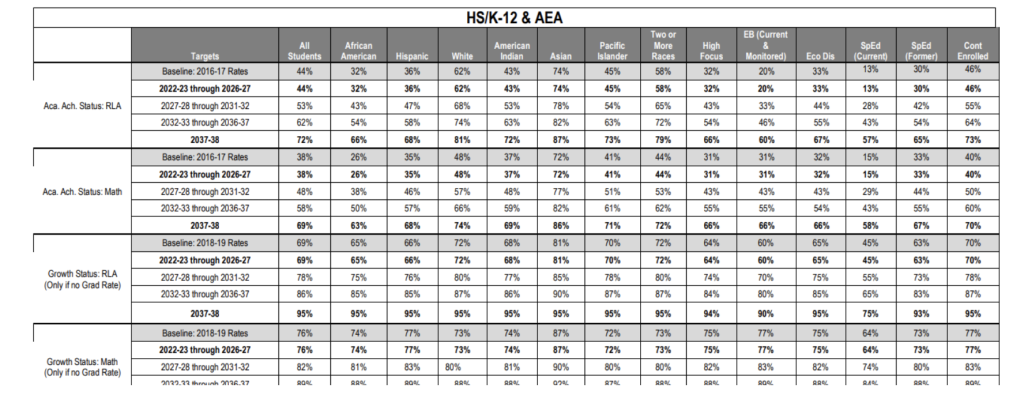
School systems should pay special attention to the data used in Closing the Gaps. Because this domain evaluates numerous data points, an overall campus improvement does not necessarily mean that all of your student groups met the interim or long-term targets.
Review Distinction Designations
Campuses that receive an overall rating of A, B, or C are eligible to earn distinction designations. These designations recognize performance relative to a campus comparison group composed of similar campuses. Each campus in Texas is assigned to a unique comparison group of schools that are most similar to it. Visit this link to find your 2026 Campus Comparison Groups.
Depending on campus type and available indicators, campuses may be eligible for distinctions in the following areas:
- Academic Achievement in Reading/English Language Arts
- Academic Achievement in Mathematics
- Academic Achievement in Science
- Academic Achievement in Social Studies
- Top 25 Percent: Comparative Academic Growth
- Top 25 Percent: Comparative Closing the Gaps
- Postsecondary Readiness
Districts are eligible for the Postsecondary Readiness distinction.
A distinction designation provides an opportunity to identify areas in which a campus performed strongly compared with similar campuses.
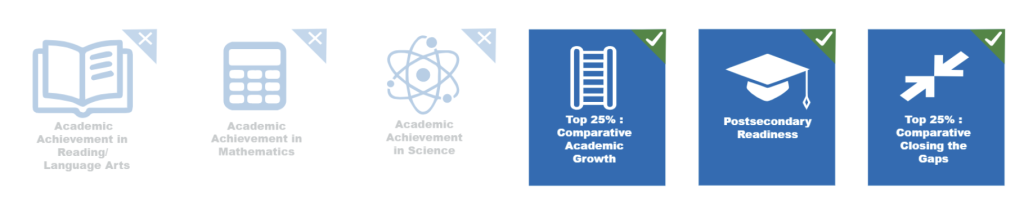
Campuses that do not earn an anticipated distinction can review the distinction designation data tables to identify which indicators they met and where they ranked within the comparison group.
Determine Whether an Appeal Is Appropriate
The release of preliminary ratings opens the accountability appeals process. School systems considering an appeal should carefully review the official 2026 appeals timeline, the applicable data tables, and Chapter 8 of the 2026 Accountability Manual.
TEA states that school systems may appeal for any reason. However, the accountability rules must be applied uniformly, and requests for exceptions to the rules will most likely be denied.
School systems should identify:
- The specific district or campus rating being appealed
- The domain or indicator affected
- The students or data involved
- The circumstances that caused the issue
- The documentation supporting the appeal
- The rating that would result if the appeal were granted
An appeal should include all relevant information when it is submitted. TEA states that school systems will not be prompted to provide additional documentation after submission.
The appeals process is also not intended to correct data that a school system inaccurately reported. TEA states that an appeal based solely on a district’s submission or inaccurate data will likely be denied.
Prepare to Communicate the Results
Accountability results are shared with several audiences, including boards, staff, families, and community members. Each audience may need a different level of detail, but the explanation should remain consistent.
When preparing communications, consider including:
- The overall and domain ratings
- Changes from the previous year
- Areas of strength
- Areas needing additional attention
- Distinction designations earned
- Factors that influenced the results
- Actions already underway
- The next steps for the school system
Accountability ratings provide one measure of district and campus performance. Providing the supporting information helps audiences understand what contributed to the results and how the school system plans to respond.
The 2027 Accountability Rules Are Already Available
School systems do not have to wait for the 2027 Accountability Manual before beginning their planning.
TEA released the final 2027 A–F Accountability Rating System Manual on March 19, 2026. According to TEA, the manual was made available earlier than ever to provide school systems with the methodology that will affect their 2027 ratings before the beginning of the 2026–27 school year.
The 2027 cut points, domain and indicator methodologies, and overall accountability system remain the same as those previously established. TEA identified two minor updates:
- A granted Closing the Gaps appeal can update comprehensive, targeted, or additional targeted support intervention federal identifications.
- The deadline for campus number requests moved from September 1 to May 31.
Previously adopted requirements affecting 2027 CCMR calculations will also take effect. For accountability in 2027, students can earn CCMR credit for an eligible college preparatory course only if the course is taken during their 12th grade and fulfills the requirements outlined by the district and its partner institution of higher education.
CCMR credit for an industry-based certification requires the student to earn an approved certification from the applicable list and be reported as a career and technical education completer in an aligned program of study.
School systems should review the manual and confirm that district and campus monitoring systems reflect these requirements.
Moving From Results to Action
The preliminary 2026 ratings provide an opportunity to examine what occurred. The finalized 2027 manual provides the rules school systems can use to plan what happens next.
As leaders review results, the goal is not to just identify the calculation behind a rating. It aims to assess what the data reveals about student performance, academic growth, student groups, CCMR outcomes, and graduation, and then link those findings to targeted actions for the 2026–27 school year.
How We Can Help
To gain insight or help with specific questions related to ratings, contact the accountability specialists at ESC Region 13. Subscribe to the accountability newsletter for the most current information, dates, and news regarding the A–F Accountability system. You can also visit our webpage for professional development opportunities and resources.
Read more articles on accountability issues on the ESC Region 13 blog.
Note: The article was published on August 28, 2026.

Melinda Marquez is the Director of Accountability, Assessment, and Leadership Systems here at ESC Region 13.



Add comment